Labor is physical work. Your uterus is contracting, your body is using energy, and depending on how labor begins, the process may last hours—or even days. So it makes sense that one surprisingly common question from expecting parents is: Can I eat during labor?
The frustrating answer is: it depends. What you are allowed to eat or drink can depend on where you give birth, your individual health and risk factors, whether you receive an epidural, how your labor is progressing, and whether there is a possibility that general anesthesia could become necessary.
Some hospitals allow low-risk patients to eat during portions of labor. Others permit only clear liquids once admitted. And some have more restrictive policies. Understanding why these policies exist—and what questions to ask before labor—can help you enter the conversation informed rather than discovering the rules when you’re already hungry, tired, and contracting.
Why Did Hospitals Stop Women From Eating During Labor?
Restrictions on eating during labor largely trace back to concerns about aspiration during general anesthesia. In the 1940s, aspiration (stomach contents entering the lungs while a patient was unconscious) was identified as a serious cause of maternal complications and death associated with obstetric anesthesia. In response, restricting food and drink during labor became common practice.
But obstetric anesthesia has changed significantly since then. Today, epidural and spinal anesthesia are much more commonly used during childbirth, including many C-sections, while general anesthesia is used much less frequently. That doesn’t necessarily mean aspiration is no longer a concern. It can be a serious complication when it occurs, but changes in anesthesia and obstetric care have led researchers and professional organizations to continue reevaluating whether every laboring person needs the same restrictions.
So… Can You Actually Eat?
There isn’t one answer that applies to every laboring person. Research has found that more liberal approaches to eating and drinking during labor have not demonstrated clear harm for many low-risk laboring women, but professional guidance remains more cautious about solid foods because of the possibility that emergency anesthesia could become necessary.
That’s why your personal circumstances matter. Someone experiencing an uncomplicated, low-risk labor may receive different guidance than someone with medical complications or an increased likelihood of needing operative delivery or general anesthesia. Unfortunately labor isn’t predictable, and your risk level isn’t necessarily fixed, as circumstances can change as labor progresses.
The important question isn’t simply, “Is eating during labor safe?” A better question is: “What are the benefits and risks of eating during my labor, given my individual circumstances?”
Early Labor and Active Labor May Feel Very Different
There’s also a practical side to this conversation that policies don’t always explain: many women simply don’t want food once labor becomes intense. During early labor, contractions may still be spaced apart and manageable. You may be walking, talking, resting, and feeling hungry enough to eat normally.
As labor intensifies, digestion slows and nausea or vomiting can occur. A large or heavy meal that sounded wonderful six hours earlier may become the absolute last thing you want. If you are laboring at home and your provider has not instructed you otherwise, this can be a good time to focus on nourishment and hydration while you still feel up to it. Rather than waiting until you’re depleted, think about giving your body usable energy for the work ahead.
What About an Induction?
This conversation becomes especially important when labor is induced. An induction does not necessarily mean a baby will arrive that day. Depending on cervical readiness, the methods being used, and how the body responds, an induction can take many hours and sometimes extend into multiple days. That can be a long time to go without meaningful nourishment.
Hospital policies vary regarding what patients may eat during different stages of an induction. Some may allow regular or light meals during early cervical ripening and place additional restrictions once pitocin begins, an epidural is placed, or active labor develops. Other hospitals may have different protocols.
If you’re planning an induction, don’t wait until you’re admitted to find out. Ask beforehand: “What will I be allowed to eat and drink during the different stages of my induction?” That one question can help you prepare much more realistically.
If You Can Eat, What Should You Choose?
Labor probably isn’t the ideal time for an enormous, heavy meal. If you’re able and permitted to eat, foods that are familiar, relatively easy to digest, and provide useful energy may feel better than something greasy or particularly rich. Depending on your preferences and medical guidance, possibilities might include:
- Toast or crackers
- Oatmeal
- Bananas or other fruit
- Applesauce
- Yogurt
- Soup or broth
- Smoothies
- Honey
- Other simple foods you already know your stomach tolerates well
You don’t need a perfect “labor meal.” Think energy, comfort, and tolerability. And don’t forget hydration. Water, electrolyte drinks, clear juice without pulp, tea, broth, and other approved clear liquids may help maintain hydration and provide some energy when solid foods aren’t permitted or don’t sound appealing.
What Does “Clear Liquids” Actually Mean?
If your hospital tells you that you can have clear liquids but not solid food, that does not necessarily mean water only. Depending on hospital policy, clear liquids may include:
- Water
- Clear juice without pulp
- Sports or electrolyte drinks
- Jello
- Tea
- Black coffee
- Clear broth
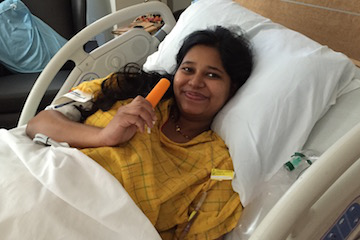
- Ice or popsicles that meet the hospital’s guidelines
Ask your hospital specifically what it considers a clear liquid because policies can vary. If you’re being induced, consider packing approved drink options you actually enjoy rather than assuming the hospital will have something you want.
When Might Eating Be Restricted?
There are situations in which your medical or anesthesia team may recommend limiting or stopping solid food because the likelihood of needing anesthesia or surgical intervention is higher. The important thing is understanding why the recommendation applies to you.
Rather than viewing every restriction as outdated, or every hospital policy as automatically necessary, ask for context. You might simply say: “Can you help me understand why eating is restricted in my situation?” There may be a medical reason specific to your labor. There may be an anesthesia protocol. Or it may be a standard hospital policy.
Knowing which one you’re dealing with allows you to have a much more informed conversation.
Labor Requires Energy—and Every Labor Is Different
Birth asks a lot of your body. For some women, hunger disappears completely once labor becomes intense. For others, especially during a long early labor or induction, hunger and exhaustion become very real.
There isn’t one universal labor experience, which is exactly why conversations about eating and drinking deserve more nuance than a blanket yes or no. Preparation means knowing your hospital’s policies, understanding your individual circumstances, nourishing yourself when appropriate, and being willing to ask questions if recommendations change.
You may ultimately decide that you’re comfortable following a restriction. You may learn that you have more options than you expected. Or you may reach active labor and decide that food is the last thing on Earth you want. The goal isn’t to convince every woman to eat during labor. It’s to help you understand your options so you aren’t trying to learn them for the first time while you’re having contractions.
Birthing Peace helps expecting families prepare for the realities of labor—not just the birth they hope for, but the questions, choices, and unexpected moments that may come along the way.
Book a call to learn more about birth doula support with Birthing Peace.