Nearly one in three babies in the United States is born by C-section, yet many expecting parents have little idea what actually happens during the procedure until they—or someone they love—are preparing for one.
A C-section may be planned weeks in advance or become necessary after labor has already begun. Either way, knowing what to expect can make an unfamiliar operating room feel a little less overwhelming. And while a C-section is major abdominal surgery, it is also a birth. There are still preferences to consider, questions to ask, a baby to meet, and moments worth protecting.
Before Your C-Section: What Happens in Pre-Op?
For a planned C-section, you’ll typically receive instructions beforehand about when to stop eating and drinking and when to arrive at the hospital.
Once you’re admitted, preparation may include:
- Changing into a hospital gown
- Placement of an IV
- Bloodwork
- Fetal monitoring
- Reviewing and signing consent forms
- Meeting members of the surgical and anesthesia teams
- Receiving medication as needed before surgery
You’ll also typically have a urinary catheter placed around the time anesthesia is administered.
Most scheduled C-sections are performed using a spinal or epidural, allowing you to remain awake while your lower body is numb. If you already have a working epidural during labor, medication may be increased through it for surgery. General anesthesia—where you are completely asleep—is less common but may be necessary in certain urgent situations or when regional anesthesia isn’t appropriate.
If your C-section is happening unexpectedly during labor, things may move much faster. That change of pace can feel scary, especially when the birth you pictured suddenly shifts. Even then, when circumstances allow, you deserve to understand what is happening and why.
Entering the Operating Room
The operating room can feel very different from a labor room. It’s brighter, cooler, busier, and filled with equipment and people performing very specific roles. Once you’re positioned on the operating table, monitors will track things such as your blood pressure, heart rate, and oxygen level. Your anesthesia team will make sure you’re appropriately numb before surgery begins.
A drape is typically placed near your chest so you don’t see the surgical field. Depending on hospital policy and the circumstances of your birth, your partner or chosen support person may then be brought into the operating room to sit near your head.
What Does a C-Section Actually Feel Like?
You should not feel sharp surgical pain once anesthesia is working properly. But numb doesn’t necessarily mean you won’t feel anything.
Many women describe sensations such as:
- Pressure
- Pulling
- Tugging
- Movement
- Pushing or rocking sensations as baby is delivered
If you feel pain—or something simply doesn’t feel right—tell your anesthesia provider immediately. They are there throughout the surgery monitoring you, managing your comfort, and adjusting medication when necessary.
You may also experience nausea, shaking, itching, dizziness, or other medication-related sensations. Let your anesthesia team know what you’re feeling rather than assuming you simply have to tolerate it.
The Moment Your Baby Is Born
A C-section commonly takes around 45 minutes to an hour from beginning to end, although your baby is usually born much earlier in the procedure. The remaining time is spent delivering the placenta, checking for bleeding, and carefully closing the surgical layers.
And this is something expecting parents sometimes don’t realize: You may still have choices about how you meet your baby. Depending on your condition, baby’s condition, and hospital practices, you can ask beforehand about:
- Lowering or using a clear drape at the moment of birth
- Seeing baby immediately after delivery
- Delayed cord clamping when appropriate
- Your partner cutting the cord, if permitted
- Immediate or early skin-to-skin
- Baby remaining in the operating room with you
- Your partner providing skin-to-skin if you’re unable
- Breastfeeding as soon as you’re able
- Taking photos or video, according to hospital policy
- Keeping baby with your support person if you and baby must temporarily separate
Not every preference will be possible in every C-section, particularly during an emergency. But a surgical birth does not automatically mean surrendering every preference you had for your baby’s arrival.
What Happens Immediately After Surgery?
Once surgery is complete, you’ll usually move to a recovery area where nurses continue monitoring your vital signs, bleeding, incision, pain level, and return of sensation and movement.
If you and baby are medically stable, this may also be a beautiful time for:
- Skin-to-skin
- Your first feeding
- Bonding
- Resting together
- Simply taking in the fact that your baby is finally here
You may still experience shaking or feel extremely tired. After everything your body has just done, that’s understandable.
The First 24 Hours
C-section recovery asks something difficult of mothers: Recover from major abdominal surgery while simultaneously caring for a newborn.
Your care team will help manage your pain and monitor your incision and bleeding. Your catheter will eventually be removed, and you’ll be encouraged to begin standing and walking as soon as it is considered safe. Those first steps may not feel glamorous. They may be slow, sore, and intimidating.
But gentle movement is an important part of recovery and helps reduce complications such as blood clots. Accept help getting in and out of bed. Hold a pillow against your abdomen if coughing, sneezing, or laughing is uncomfortable. Stay ahead of your prescribed pain-management schedule rather than waiting until you’re miserable to ask for relief. And give yourself grace. You just had a baby and surgery.
Going Home: C-Section Recovery Is Still Recovery
Going home doesn’t mean you’re healed. Your skin incision may look much better within several weeks, but deeper tissues continue healing for months. During early recovery, follow your provider’s instructions regarding lifting, driving, exercise, bathing, incision care, and sexual activity.
You may need help with things you normally wouldn’t think twice about—laundry, stairs, meals, getting out of bed, carrying older children, or simply finding a comfortable breastfeeding position. This is not the time to prove how quickly you can “bounce back.” Rest is part of recovery.
Caring for Your C-Section Scar
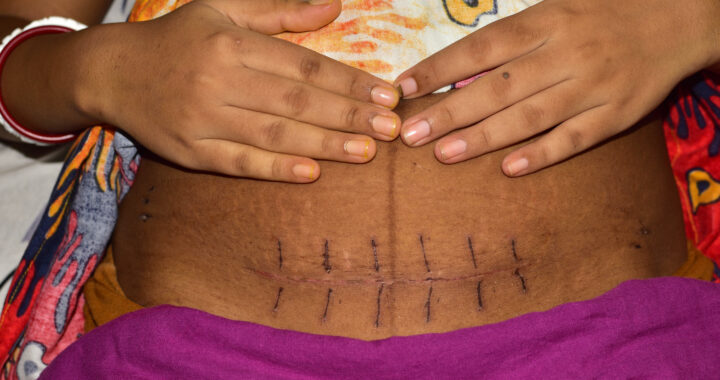
Keep your incision clean and follow the specific wound-care instructions provided by your medical team. Contact your provider if you notice concerning symptoms such as increasing redness or warmth, significant swelling, drainage, opening of the incision, worsening pain, or fever. Once the incision is fully healed and your provider has cleared you, gentle scar massage or physical therapy may eventually help with mobility, tightness, or sensitivity.
Remember that healing isn’t only about what you can see. The scar on your skin is just the outermost evidence of several layers of tissue healing underneath.
Your Emotional Recovery Matters, Too
A C-section can bring complicated emotions. You may feel relieved, grateful, disappointed, proud, sad, empowered, traumatized, or several of those things at once. A healthy baby does not automatically erase how you experienced your birth.
If your C-section was unexpected, give yourself space to process what happened. Ask your provider questions afterward if there are parts of the experience you don’t understand. Talk through the birth with your partner, doula, therapist, or another trusted support person if you need to. Your experience matters, too.
How Does a Doula Fit Into a C-Section Birth?
Doula support doesn’t suddenly stop being valuable because birth moves into an operating room.
Whether a doula can physically accompany you into surgery depends on hospital policy and circumstances, but support can still happen before and after the procedure.
A doula can help you prepare questions and C-section preferences beforehand, support you emotionally if plans change during labor, help your partner understand what’s happening, assist with early feeding and positioning afterward, and provide space to process your birth experience.
A doula isn’t there to prevent a C-section at all costs. She is there to help you feel informed, supported, and cared for—however your baby ultimately enters the world.
A C-Section Is Still Your Birth
Knowing what to expect doesn’t guarantee that everything will unfold according to plan. It does mean you can enter the experience understanding more about what may happen, what questions you can ask, and which preferences may still be available to you. A change in the way your baby is born doesn’t erase your voice from the room.
Birthing Peace helps expecting families prepare not only for the birth they envision, but also for the unexpected turns birth sometimes takes.
Book a call to learn more about preparing for birth with Birthing Peace.